Could Facial Aesthetics Be Your Next Career Move?
Whether you’re a dentist, hygienist, therapist, doctor, nurse or pharmacist, discover what building an aesthetics business really looks like, the opportunities available, the challenges you’ll face and the roadmap thousands of BTC graduates have followed.
Why So Many Healthcare Professionals Are Exploring Facial Aesthetics
The Biggest Questions Everyone Asks
It’s one of the most common questions we hear, and it’s understandable why people ask it. The reality is that while the facial aesthetics industry has grown significantly over the last decade, demand has grown alongside it. The challenge isn’t that there are “too many practitioners”; it’s that there are many practitioners offering very similar services without clearly differentiating themselves. Patients don’t simply choose the nearest clinic or the cheapest treatment. They choose the practitioner they know, like and trust. Those who invest in their clinical skills, patient experience, communication and marketing continue to build thriving businesses. Like any profession, success isn’t determined by the size of the market but by the value you bring to it.
Yes, many dentists successfully build profitable facial aesthetics businesses, but it’s important to have realistic expectations. Facial aesthetics should be viewed as a business, not just an additional clinical skill. Those who generate the best results combine excellent clinical treatments with strong consultation skills, patient communication and consistent marketing. Some dentists choose to supplement their income with one or two clinic days each month, while others gradually reduce their dental commitments and build full-time aesthetics practices. The opportunity is certainly there, but like any business, success depends on implementation rather than simply completing a training course.
Absolutely. Dental hygienists and dental therapists often possess excellent communication skills, strong patient relationships and a preventive approach to care, all of which translate well into facial aesthetics. Many of our most successful delegates are hygienists who have gradually built a loyal patient base alongside their existing role. Success doesn’t depend on your professional title; it depends on your willingness to learn, implement what you’ve learned and consistently provide excellent patient care. We’ve seen hygienists develop highly successful aesthetics clinics while continuing to enjoy their dental careers.
Not necessarily. Whether you need a Level 7 qualification depends on your personal goals, the regulatory landscape and the type of career you want to build. Many healthcare professionals begin treating patients safely and successfully after completing high-quality practical training and then choose to progress to Level 7 later as their experience grows. Others prefer to complete Level 7 from the outset. Rather than asking whether you “need” Level 7, it’s often more useful to ask whether it’s the right next step for you at this stage of your career. Understanding your objectives is more important than following a one-size-fits-all pathway.
There isn’t a single answer because every practitioner progresses at a different pace. Some delegates begin treating paying patients within a few weeks of training, while others choose to spend more time practising, building confidence and preparing their business before launching. Your progress depends on factors such as confidence, availability, marketing and how quickly you implement what you’ve learned. The practitioners who tend to see patients sooner are those who take consistent action after training rather than waiting until they feel completely ready.
There isn’t a single answer because every practitioner progresses at a different pace. Some delegates begin treating paying patients within a few weeks of training, while others choose to spend more time practising, building confidence and preparing their business before launching. Your progress depends on factors such as confidence, availability, marketing and how quickly you implement what you’ve learned. The practitioners who tend to see patients sooner are those who take consistent action after training rather than waiting until they feel completely ready.
Income varies enormously depending on how much time you dedicate to aesthetics, where you’re based, your pricing, your marketing and how well you retain patients. Some practitioners are happy generating a modest second income alongside their primary profession, while others build six-figure clinics over time. Rather than focusing on headline earnings, it’s more helpful to think about what aesthetics could realistically add to your own career. For some, that might mean funding holidays or reducing NHS commitments. For others, it may eventually become their primary source of income. The opportunities are significant, but they require consistent effort and a long-term mindset.
Yes, and many practitioners do exactly that. In fact, starting alongside your existing dental career is often the lowest-risk approach. It allows you to build your confidence, develop your patient base and gain valuable experience without relying on aesthetics as your sole source of income from day one. As your skills and diary grow, you can decide whether to maintain both careers or gradually reduce your dental sessions. There is no right or wrong approach; the best pathway is the one that fits your personal goals and lifestyle.
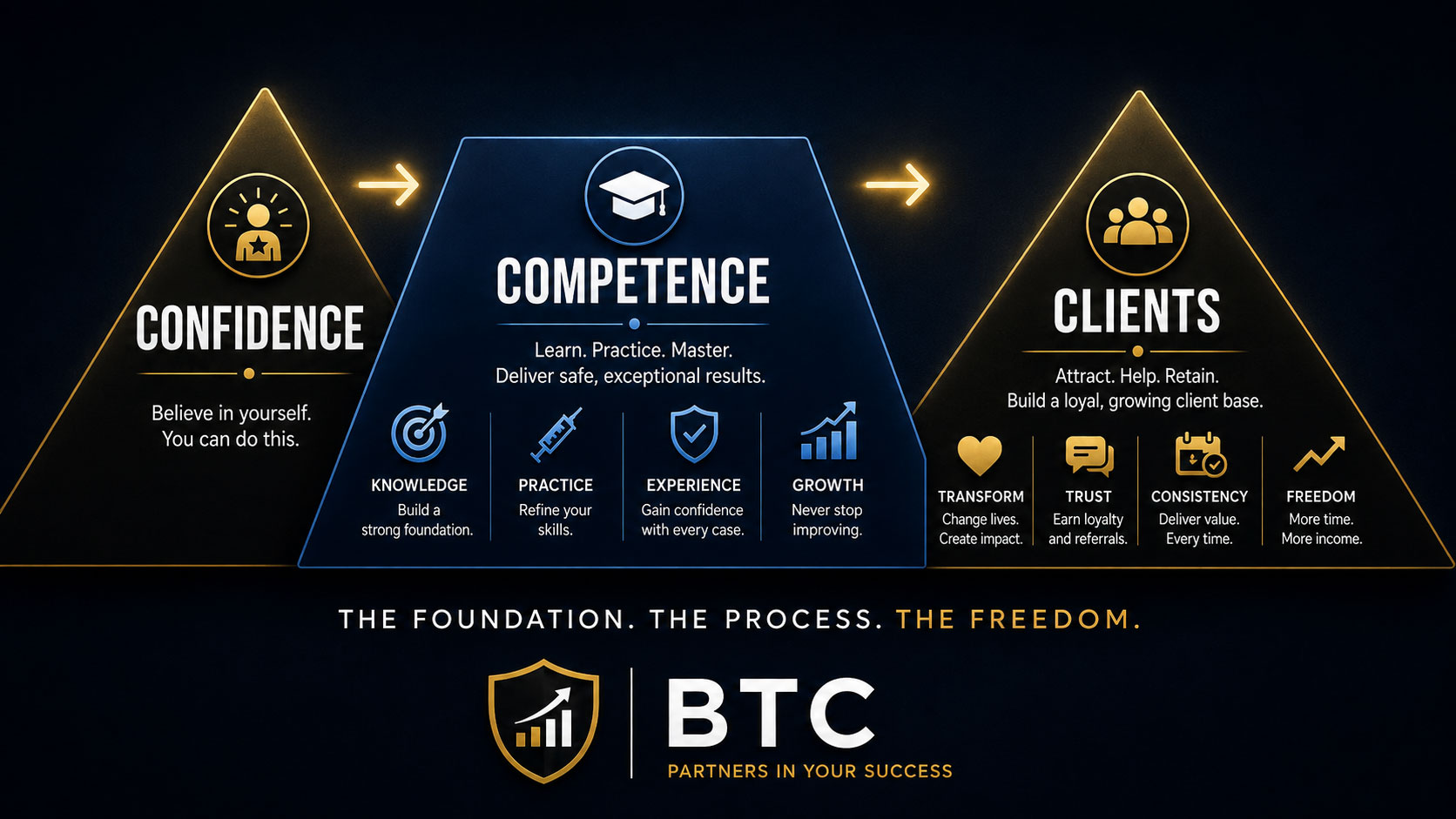
Almost every practitioner experiences periods of self-doubt, particularly when starting something new. Confidence isn’t something you’re given at the end of a course; it’s something that’s built through repetition, experience and ongoing support. That’s why continued mentoring, practising on appropriate patients, reflecting on your cases and asking questions are so valuable. Even highly experienced practitioners continue learning throughout their careers. Losing confidence occasionally is normal. The key is having the right support and systems in place to help you rebuild it quickly.
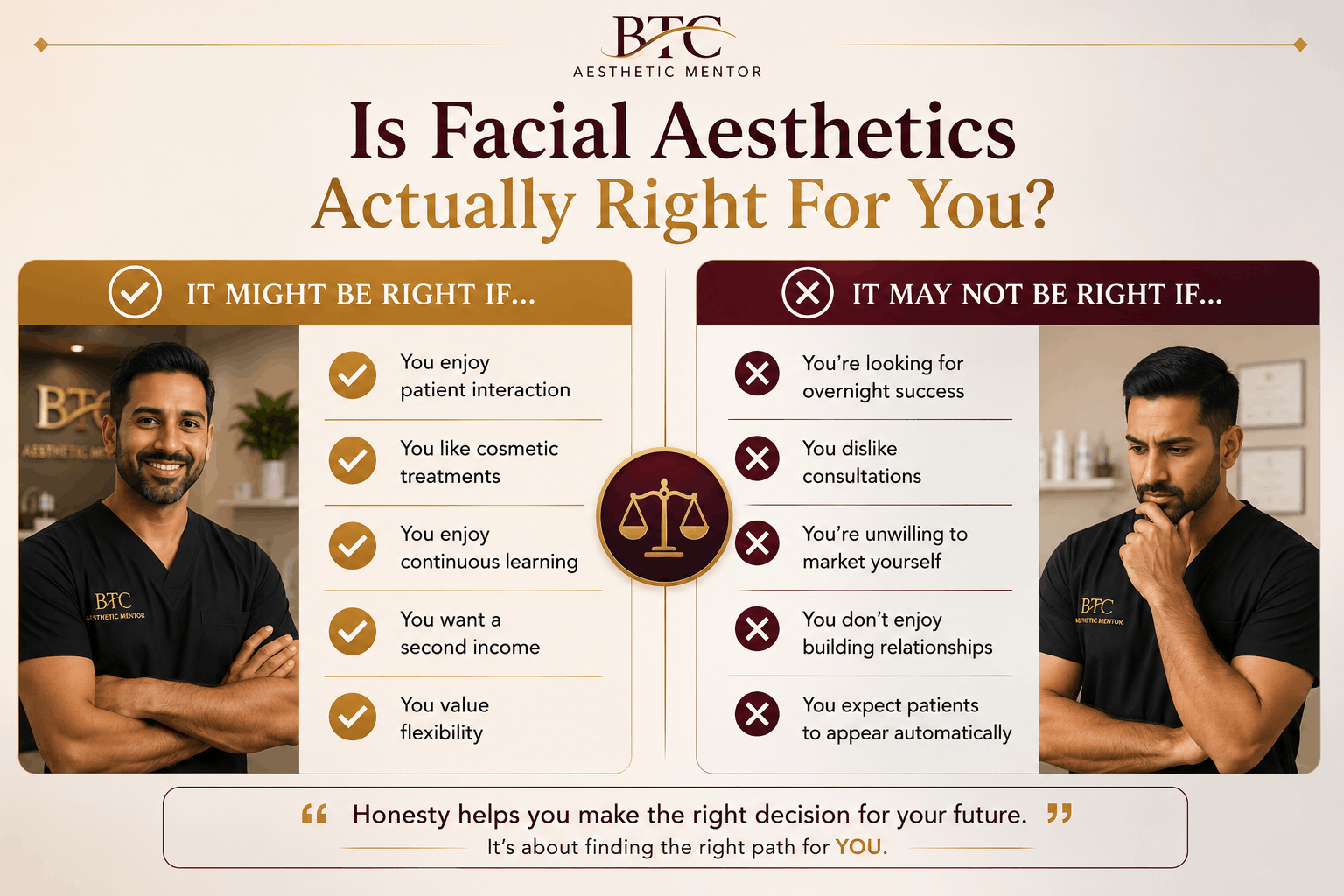
One of the biggest misconceptions is that patients will automatically appear once you’ve completed training. In reality, successful practitioners actively build their patient base through a combination of excellent patient experience, referrals, existing dental patients, social media, educational content, networking and consistent marketing. Most thriving clinics weren’t built overnight; they were built one patient at a time. The good news is that you don’t need thousands of followers or a viral social media account. You simply need a clear strategy, consistency and a commitment to building trust within your local community.
“£190k extra! Without the training & support from Dr Harry this wouldn’t have been possible” – Dr. Parm Battu
What Does The Journey Actually Look Like?

What Does Success Really Look Like?
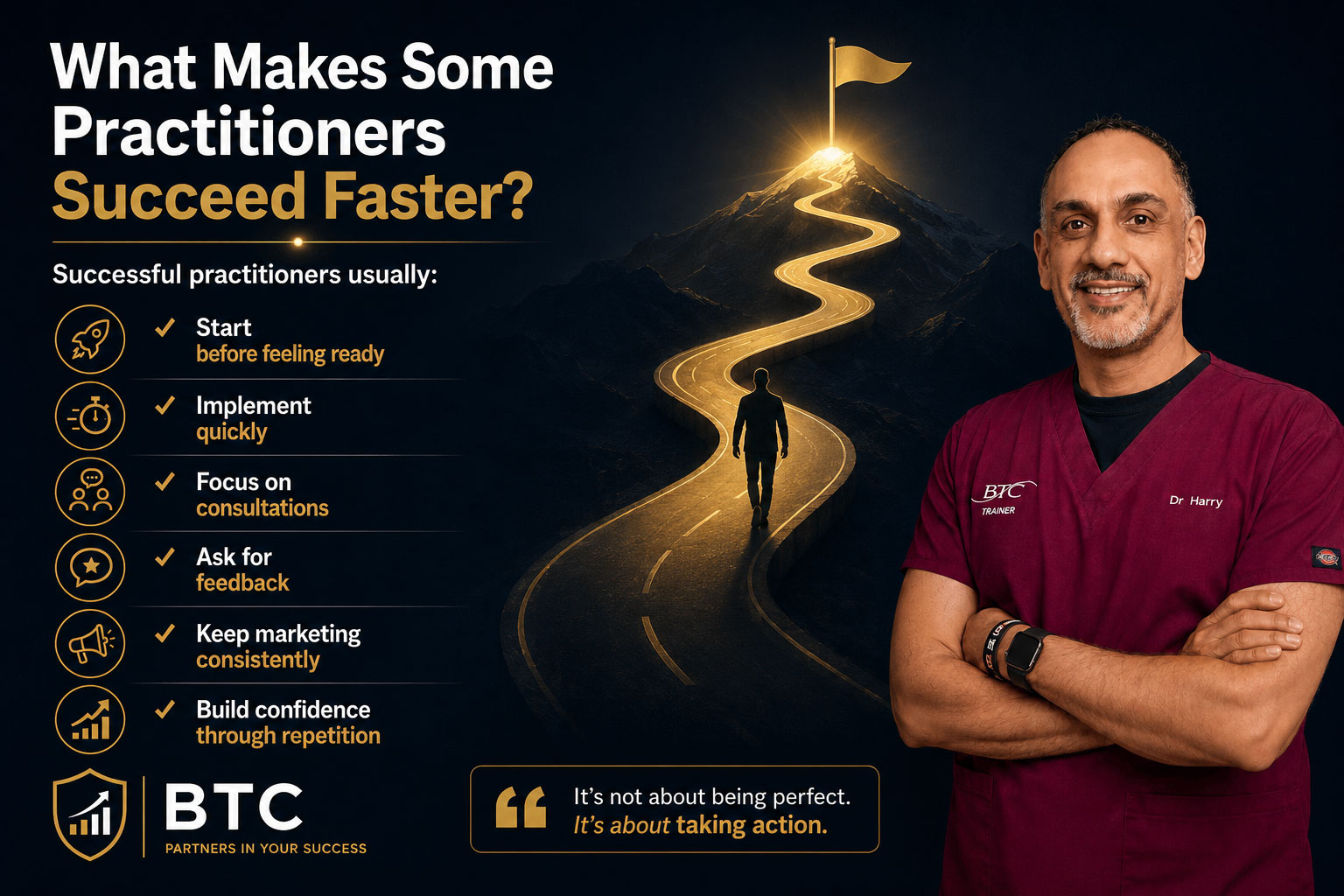
What Makes Some Practitioners Succeed Faster?
Download The Beginner's Toolkit™
Everything you need before deciding.
Includes:
Still Unsure?
Book a Career Planning Call™
- No pressure.
- No sales pitch.
- Just clarity.